
With built-in downdraft extraction, a teppanyaki grill table does not need a separate exhaust hood above it. Fume is drawn in at the edge of the griddle, carried through the body and cleaned in the built-in purification unit before it leaves the table, so the space above the plate stays open for the chef and for the guests watching.
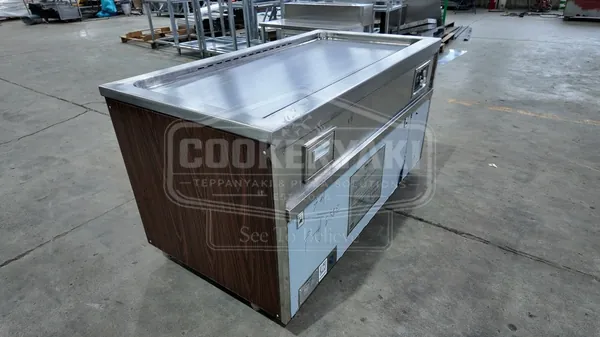
Fume is drawn off by the hood
The hood sits behind the heating zone. Fume from cooking is drawn away by the suction of that hood, passes through the purifier in the body and leaves through the duct. Where more pull is wanted, a row of outlets can be added along the front edge of the plate, blowing the fume toward the hood so that front blow and rear suction work together.
The case that does need a hood
Overhead extraction works the other way round. A canopy covers the plate, captures fume that has already risen, and pulls it up through a duct in the ceiling. That arrangement needs a hood wide and deep enough to overlap the whole plate, plus a ceiling void for the duct, and it stands between the chef and the guest.
Parallel tables and shared extraction
Downdraft removes the need for a hood over one table. Where several rectangular units sit side by side, as on an extra-large sectional teppanyaki grill table run, or where the whole floor runs on shared extraction, the property office asks for the combined exhaust volume of every unit before approval. A central canopy or a shared riser often comes back into the drawing at that point, not because one table needs it but because the volume has to leave the building somewhere.
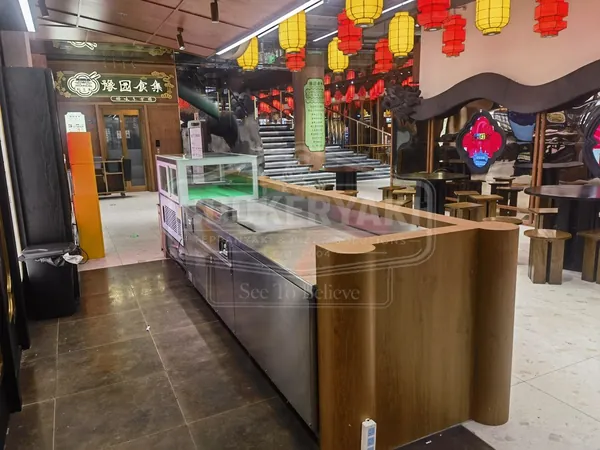
Downdraft extraction changes where the fume is captured, not whether the air has somewhere to go. Settle that at the drawing stage against the actual table layout. The commercial teppanyaki FAQ covers the rest of the site questions that come up at the same stage.
About Cookeryaki
Cookeryaki, founded in 2004, makes teppanyaki grill tables, with headquarters and a showroom in Pudong, Shanghai, and a 5,000+ sqm factory in Huai'an, Jiangsu. Every table has a built-in fume purification system with a purification rate of up to 95%, and countertop size and shape are built to order. Tables go into teppanyaki restaurants, hotels, private clubs and food halls, and the company exports to Southeast Asia, the Middle East, Russia, Europe, North America and Latin America. It holds multiple international certifications and dozens of patents granted by the China National Intellectual Property Administration.