
Yes. A commercial teppanyaki grill table works in a mall unit, but three things have to clear: power, extraction and approval. Power and extraction are settled at the drawing stage; the third depends on how complete the paperwork is.
Why malls run electric with downdraft
Malls do not allow open flame, and the table has none: it heats electrically. Extraction is built in, with the fan and the electrostatic purifier inside the body. Fume is drawn in at the griddle edge, purified, then pushed outside by the fan. The purifier removes up to 95% of particles above 0.1 micron.
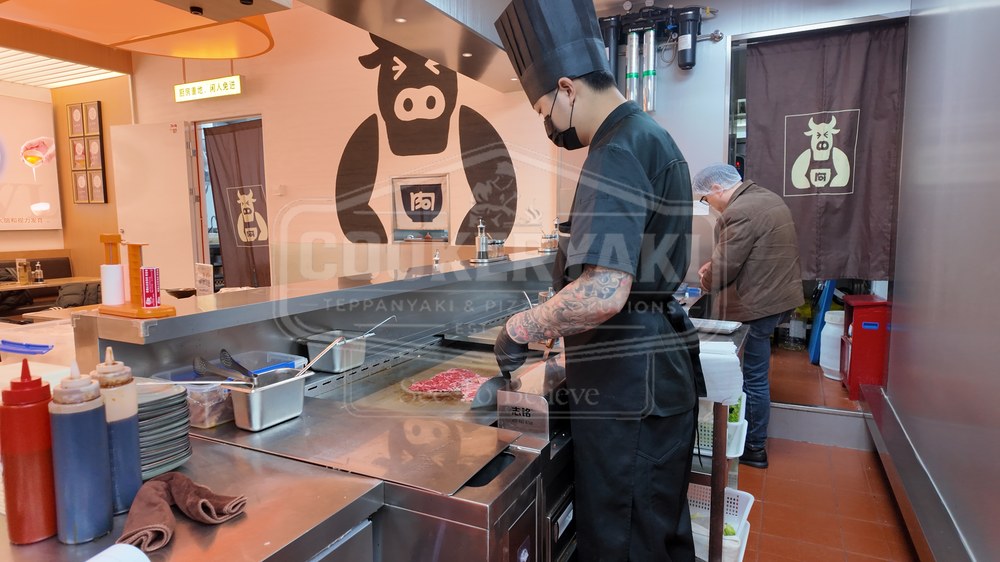
That layout gives a mall unit three things. No large hood above, so the open kitchen keeps a clear sightline and guests watch the chef work. No ceiling depth lost, which helps a tight unit. And the purifier sits ahead of the fan, so the fan handles cleaner air and lasts longer.
The four questions a landlord asks
Power: 380V three-phase five-wire, 7.5 to 8kW per unit, with spare capacity in the unit. Extraction: where the outlet goes, how the duct runs, whether a floor or wall opening is allowed. Purification: the method, the efficiency, the cleaning interval. Access: unit dimensions, route and permitted working hours.
What the approval file needs
Four items are enough: equipment data including voltage, load and dimensions; an extraction plan with route drawing, outlet position and connection sizes; a purification statement giving the method and the efficiency figure; and a programme covering access times and hot work. Two of them come from the factory, the last two from the fit-out contractor.
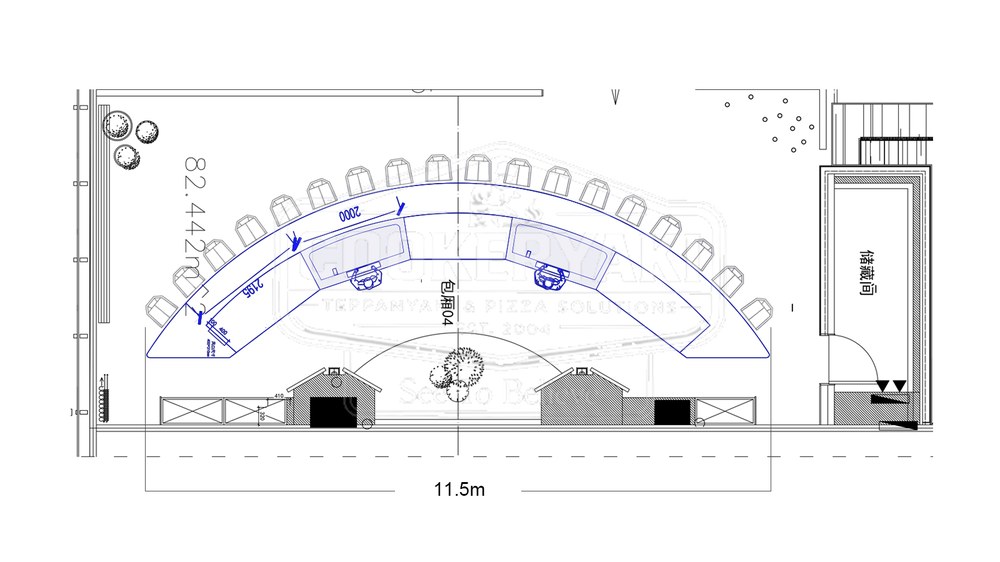
The outlet can move to suit the unit
The outlet is not fixed: below the chef's position left or right, at either side of the body, or straight down, whichever route is shorter. A unit near the shaft takes a side connection; a unit far from it runs the duct along the wall. Fewer core holes means a faster approval.
Do not forget the hot work permit
There is no flame under the griddle, but installation includes welding and grinding the counter frame. Most buildings treat that as hot work and ask for a permit, a fire extinguisher and a watchman, scheduled outside trading hours. This step is missed often, and the delivery stops at the loading door.
Access and working hours
Malls usually give night hours alone: move in after close, hand back before opening. A single table takes one to two days and can be split across two nights; a multi-table site adds a night per table. Book the service lift early, and split the table if the car is too small, deciding the split at the drawing stage.
Three reasons approval gets sent back
An extraction plan that says connect to the shaft and nothing more, with no route drawing or connection sizes. A purification claim with no figure behind it. A programme with no hot work permit. All three are paperwork, easy to fix and expensive in time.
Collect three things before signing the lease
A floor plan showing the exhaust shaft, the spare power capacity, and the openings the landlord permits. With those three, drawings and an extraction plan follow within a week, and the approval file has something to stand on.
Extraction drawings sit with the design drawings, and the mall format is covered under open kitchen teppanyaki.
Cookeryaki: malls and landlords
Mall units and office floors differ in power, shaft position and approval route. Cookeryaki issues equipment and extraction drawings to the unit: downdraft by default, the outlet placed on the shortest permitted route, and no hood above. Tables are built in Huai'an, Jiangsu, on 5,000+ sqm, across 15 procedures, and tested before packing.