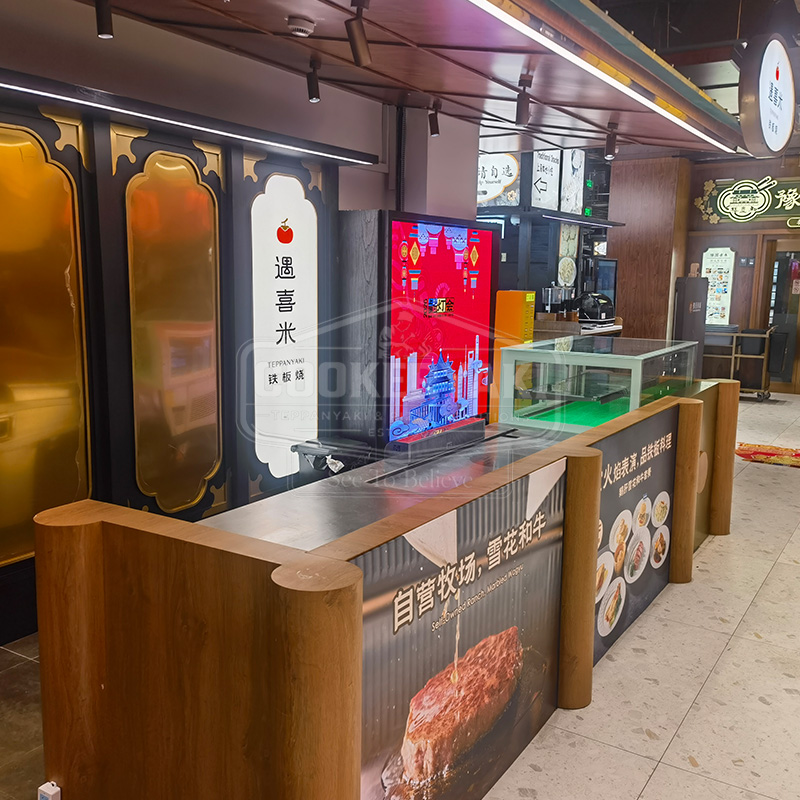
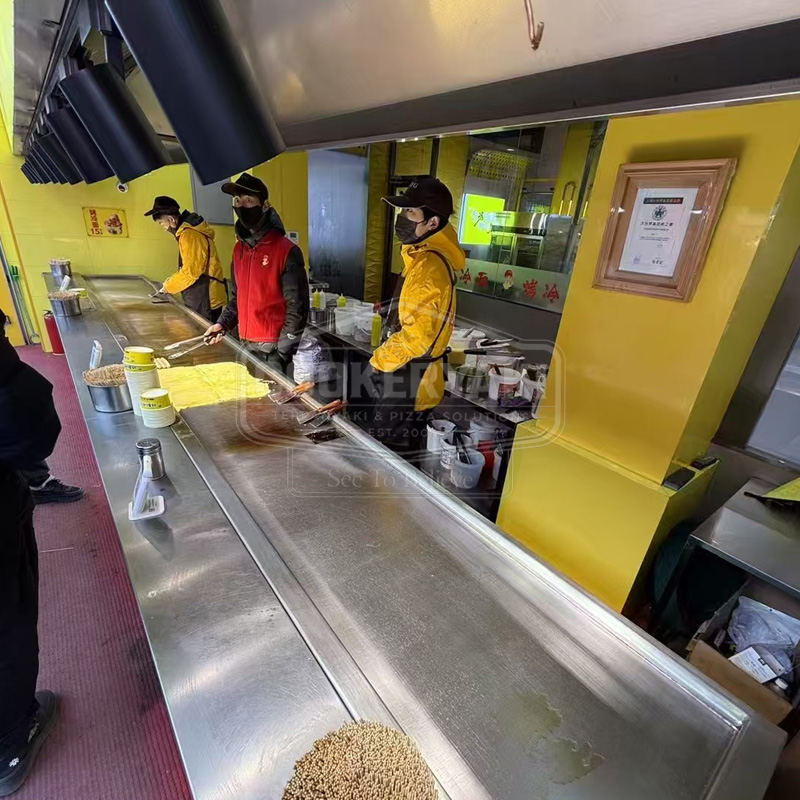
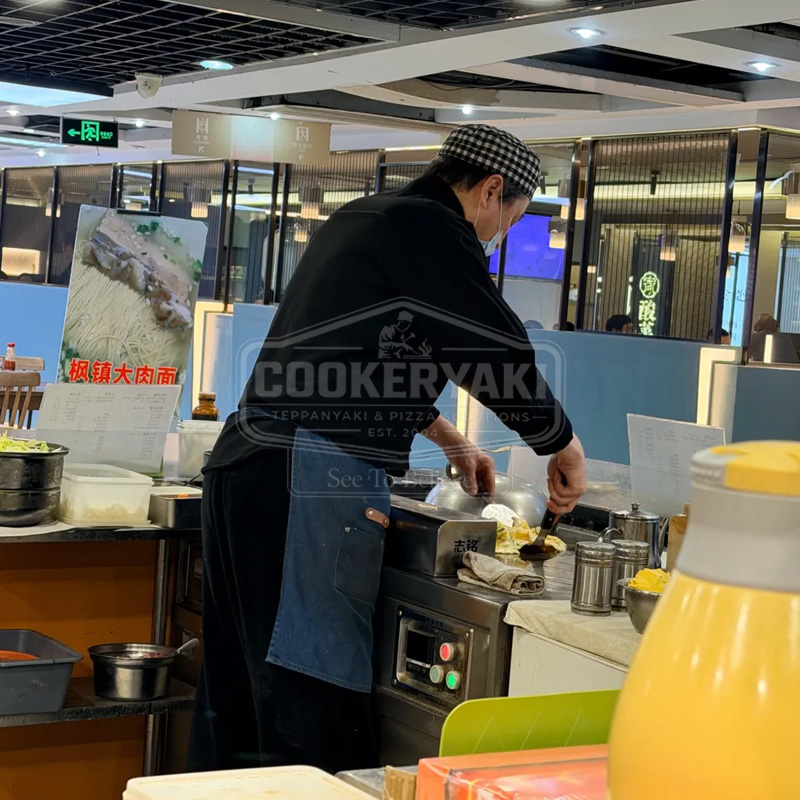
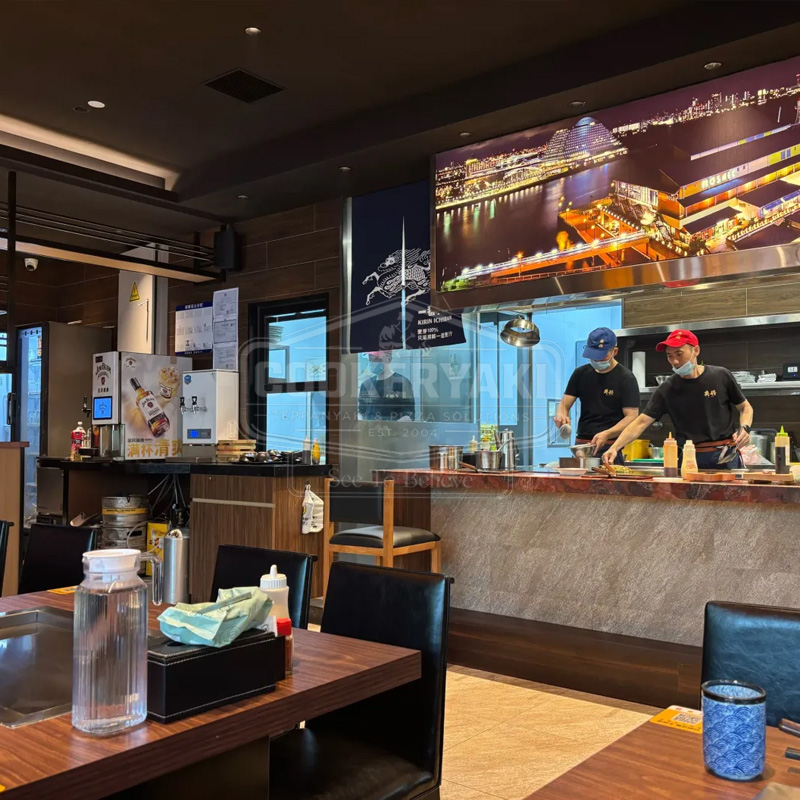
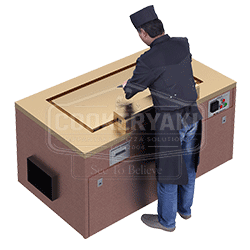
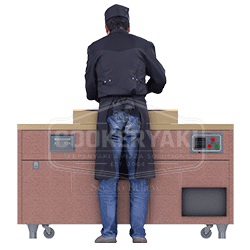
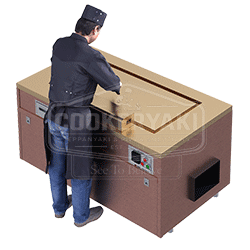
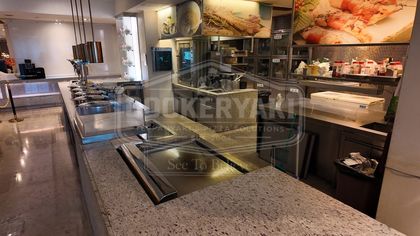
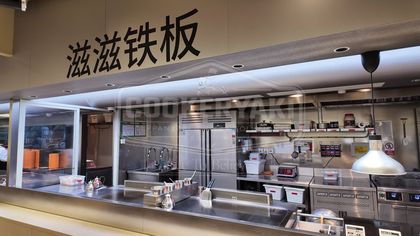
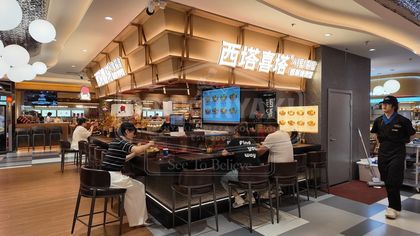
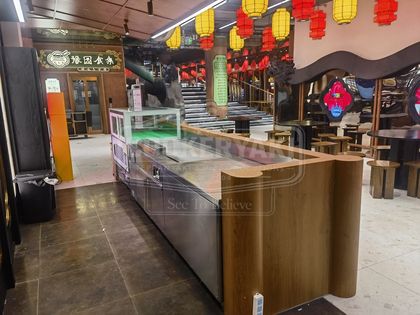
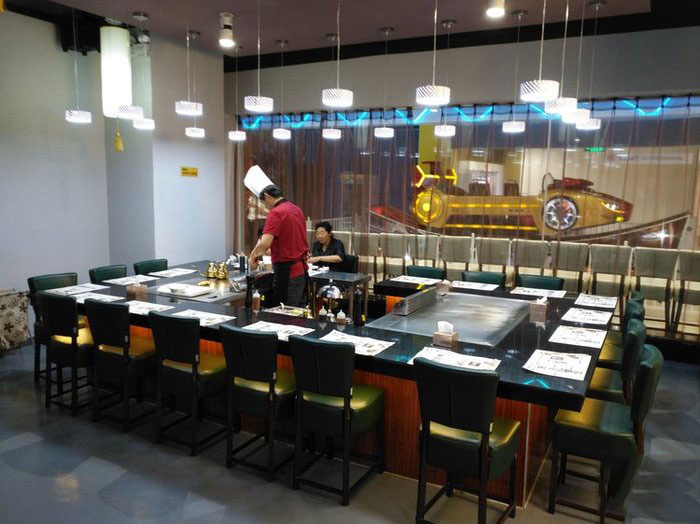
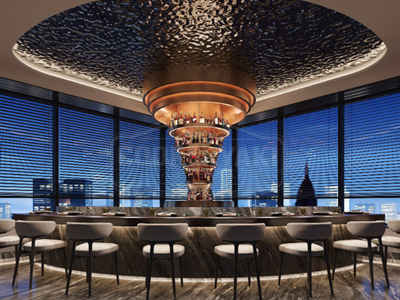
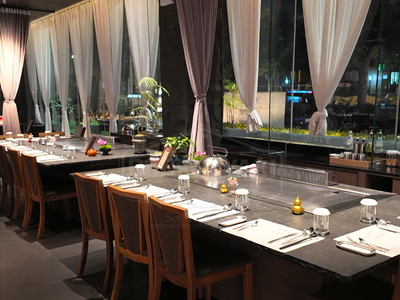
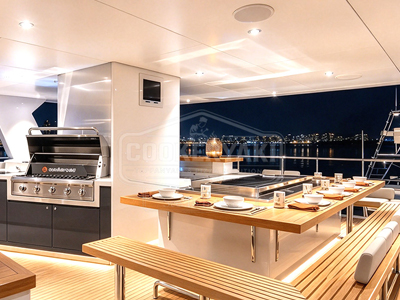
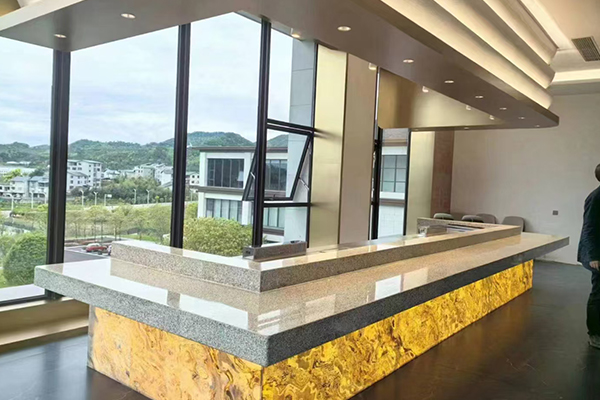
Cooked to order on the spot, open flame not permitted
Airport / Rail Station / Motorway Services
Concentrated footfall, fast service required
Stadium / Exhibition Venue Kiosk
Events and shows, open flame not permitted
Teppanyaki Fried Rice / Noodle Specialist
Single category, high table turns
Teppanyaki Snacks / Skewer Kiosk
Low investment, quick payback
Tourist Area / Night Market Open Counter
Outdoor, high footfall, cooked in full view
02
Customization Process
A. Pre-Production: Design & Drawings
A compact layout set by your kiosk size and the extraction conditions on site, with CAD and 3D drawings confirming airflow and cable routing.
B. In Production
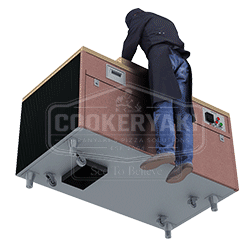
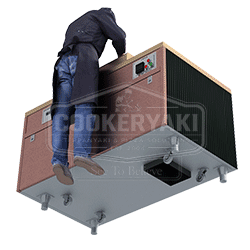
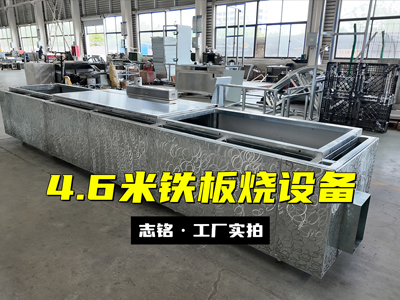
Built with downdraft extraction and an integrated purification system, so it can be used where open flame is not permitted. Every step is controlled.
C. Packing & Shipping
Compact packing, full-container or LCL shipping and customs documents arranged, ready to install on arrival.
D. Installation & Commissioning
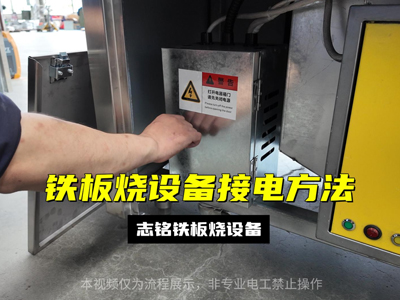
Plug and play in open-flame-free venues. Video tutorials, remote support and local installers available.
E. After-Sales & Training
1-year free warranty for quality-related issues, 24/7 response and spare parts supply, plus fast-service and single-dish training.
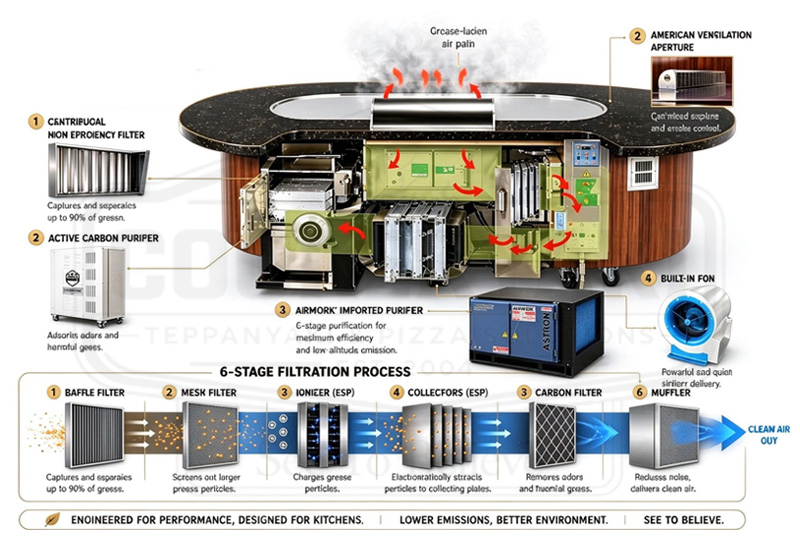
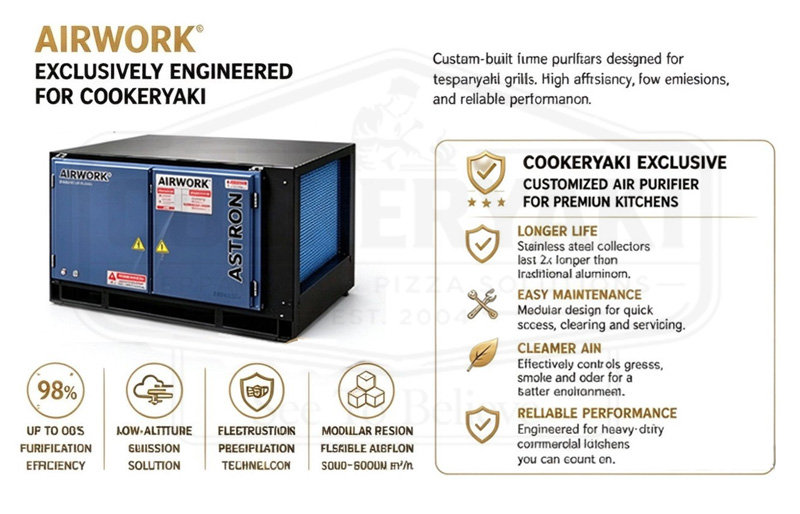
How Airwork Works
6-Stage Purification for Cleaner Air, Better Kitchens
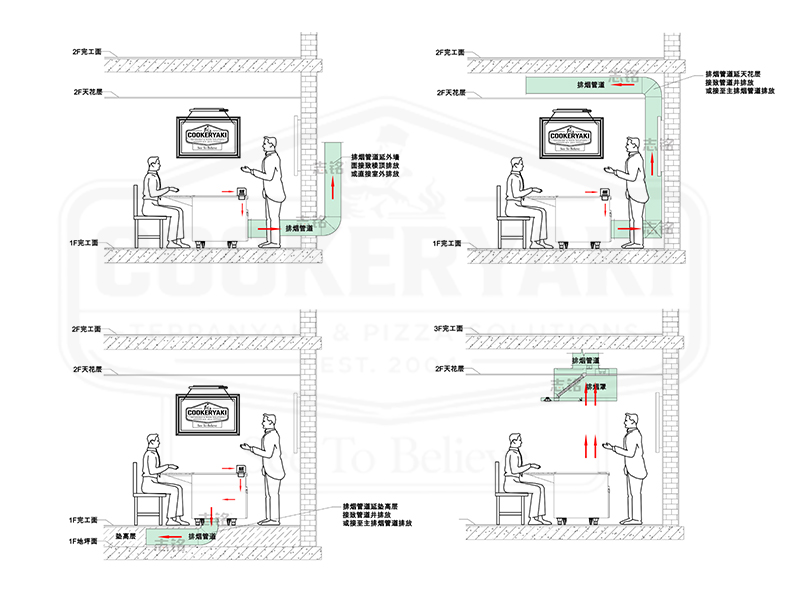
Exhaust Vent Location Diagram
Exhaust vent locations can be customized according to the site.
Left Side of Chef's SideLeft Side of EquipmentLower Left Side of EquipmentRight Side of Chef's SideRight Side of EquipmentLower Right Side of Equipment
Teppanyaki Grill Exhaust Systems
3 Types of Downdraft Exhaust, 1 Type of Top Exhaust
01Is the griddle made to order or in stock? How long does it take?
Cookeryaki is a teppanyaki equipment manufacturer from China, and we custom-make both the size and the shape. Production starts once you confirm the drawings. Lead time depends on how complex the unit is and our current schedule, and your sales contact will give you a firm date before you order.
02Does the purification unit need to be taken out for cleaning? How often?
Yes, it's removable. Take it out and wash it now and then so grease doesn't build up and block the airflow. How often depends on how much grease you cook with. For heavy-grease kitchens, like Chinese cooking, aim for about once a week. For lighter kitchens, once a month is usually enough.
03Can I customize the finish and the fume vents to fit my space?
Yes. You can match the finish to your interior style, whether that's marble, solid wood, stainless steel or something else. We can also place and design the fume vents around your actual extraction setup, so installation is easier and extraction works better.
04How is the griddle made?
The surface that touches your food goes through heat treatment, CNC machining and fine grinding. That's what gives it a smooth, flat surface, a clean grain, and even heat across the whole plate. The underside is only heat-treated, so it doesn't need the same finish.
05What are the main parts of a teppanyaki griddle? Can it be shipped in sections?
There are three main parts: the heated main unit, the built-in fume purification system, and the decorative countertop around it. Most of the time it ships as one complete unit. If moving it or getting it into your space is a problem, though, we can build it in sections and assemble it on site, which makes delivery much easier.
06How do I clean and maintain the griddle plate?
Let the plate cool down to around 30-50°C (86-122°F) first. Then pour on a little vegetable oil and scrub it with a scouring pad until it shines, and finish with a thin coat of oil to protect it. Empty and clean the residue drawer and port every day after closing. Clean the filter about once every three months, and empty the oil collection drawer at least once a day. If you won't be using the griddle for a while, coat the plate in oil so it doesn't rust.
07How do I know if a teppanyaki griddle is good quality?
Start with the griddle. Check how thick it is and how well it's finished. A good plate is smooth, flat and evenly polished, with a clean grain and color, and hard enough that spatulas and knives won't leave scratches. It should also handle high heat without warping. Next, look at the fume purification: a good unit pulls in and cleans over 95% of the smoke. Finally, check the power consumption and the safety features. A griddle that does all three well is worth the money.