
A teppanyaki grill table runs on 380V three-phase five-wire. The question is not whether the supply can carry it. Three things decide it: how the full load is calculated, whether each table gets its own circuit, and whether the site will provide three phases.
Where the power figure comes from
Heating tubes in a banked flat arrangement run on 380V/50Hz. An induction plate uses the same supply and the same range. Add a built-in fan, an oil fume purifier and a temperature controller, and the load is calculated on the full configuration. Declare the full figure when applying for capacity, not the bare unit.
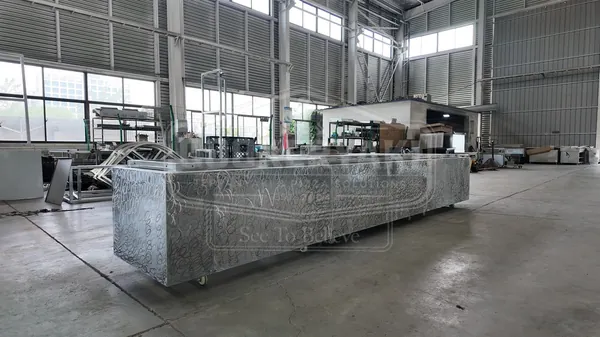
One circuit per teppanyaki grill table
Give every table its own circuit and its own breaker. Cable size is calculated by the site electrician to local code, and no circuit is shared with other heavy equipment. With several tables in a row, wire them one by one, because a single shared feed takes the whole line down. Connect neutral and earth as well as the three phases.
Heat-up decides the headroom
The two heating methods behave differently on heat-up. An induction plate heats the griddle directly by electromagnetic induction, so it comes up to temperature quickly. Heating tubes warm the element and pass that heat into the plate, so the rise is slower and the thermal mass is larger. The induction plate also holds a tighter spread, at the cost of a heavier start-up current. Size the circuit headroom on the start-up case, not the running case.
If the site has 220V
The load is recalculated, and the configuration or the supply may change. Confirm this before the order is placed. In malls the usual route is an upgrade to three-phase, released before production is scheduled. The other order leaves a table waiting for power.
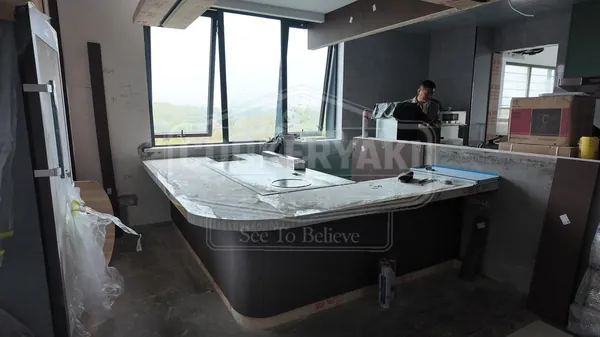
Estimate capacity by table count
Multiply tables by unit power and keep a margin. Three tables running together draw 27kW. Add the cold room, the dishwasher and the air conditioning to the same sheet, because many units run out on the combined load.
One drawing before signing
Mark the incoming capacity, the existing circuits, the number of tables and their positions on one drawing. Wiring and a connection note follow from it, and the electrician works to that drawing instead of rewiring on site. Connection and start-up steps are set out in our teppanyaki maintenance.
Supply differs by market Supply standards are set per market. A teppanyaki grill table is built to the destination grid, with voltage, frequency and plug type set per order. Send the site address and the incoming supply, and we issue connection data for that market.
Cookeryaki: the factory behind the table
Mall units, office floors and street-side counters each arrive with their own supply. A teppanyaki grill table is built to the destination grid. Voltage, frequency and plug type are set per order, and output is matched to counter size and configuration. The tables are made in Huai'an, Jiangsu, in a 5,000+ sqm factory that runs 15 procedures from laser cutting to final inspection. Every unit is tested before packing, and a showroom in Pudong, Shanghai, is open for buyers. The brand started in Shanghai in 2004.