
Steak from a teppanyaki grill table tastes different from steak in a home pan, and the plate explains most of it. Four things do the work: the plate holds its heat, the surface reaches browning temperature fast, the whole face of the steak makes contact, and the chef works the temperature zones.
Heat that stays in the plate
A domestic pan is thin. Put a cold steak in it and the surface temperature falls away, so the meat sits in its own moisture instead of searing. A commercial teppanyaki grill table uses a plate at least two centimetres thick, twenty to twenty-five millimetres on most builds. That mass holds heat and gives it back, so the surface stays hot after the steak goes on.
Why the crust forms
The Maillard reaction starts around 140 to 165°C and runs fastest between 160 and 200°C at the surface of the food. The plate runs above 200°C, so the steak surface climbs into that band within seconds and a golden crust forms in under a minute. Protein and sugars on the surface do the work, and the compounds they release are why a steak cooked this way smells different from one that was gently warmed through.
Full contact, not grill marks
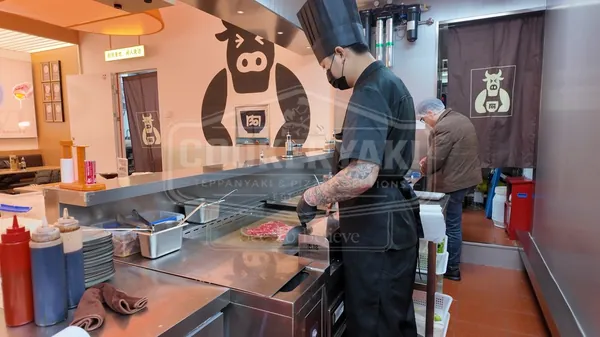
On a grill, contact comes from the bars alone, which is why you get stripes with pale gaps between them. A plate touches the whole surface at once, so browning is even across the steak and the crust closes over the meat. Juice stays inside rather than running out, which is why the sliced steak is still pink and wet in the middle. Restaurants that cook in front of guests build their menu around this.
A plate with zones
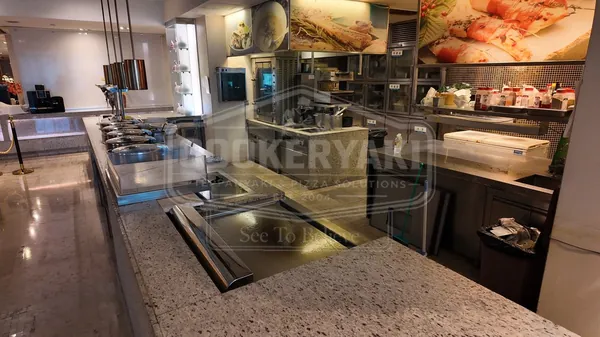
A chef on a commercial plate is not cooking on one temperature. The centre runs hot for sealing, the middle band sets the pace of cooking, and the outer edge is cooler, used to rest and hold. Ingredients move between these zones through the service, so a steak can be seared, brought to temperature and rested without leaving the plate. A last touch of butter, garlic and sauce goes on at the end.
What it comes down to
Stable heat, even contact and control over the browning reaction. A home pan can do one steak well if you watch it closely. A restaurant teppanyaki setup does the same for a counter of guests, course after course, and that is the difference guests notice.
About Cookeryaki
Cookeryaki, founded in 2004, makes teppanyaki grill tables, with headquarters and a showroom in Pudong, Shanghai, and a 5,000+ sqm factory in Huai'an, Jiangsu. Every table has a built-in fume purification system with a purification rate of up to 95%, and the countertop size and shape are built to order. The company holds multiple international certifications and dozens of patents granted by the China National Intellectual Property Administration.